We weighed the parcel, calipered the hem, hood and cuffs, then walked a week in this pale green $141 shell. The numbers hold up; the fabric claims need a seller conversation first.
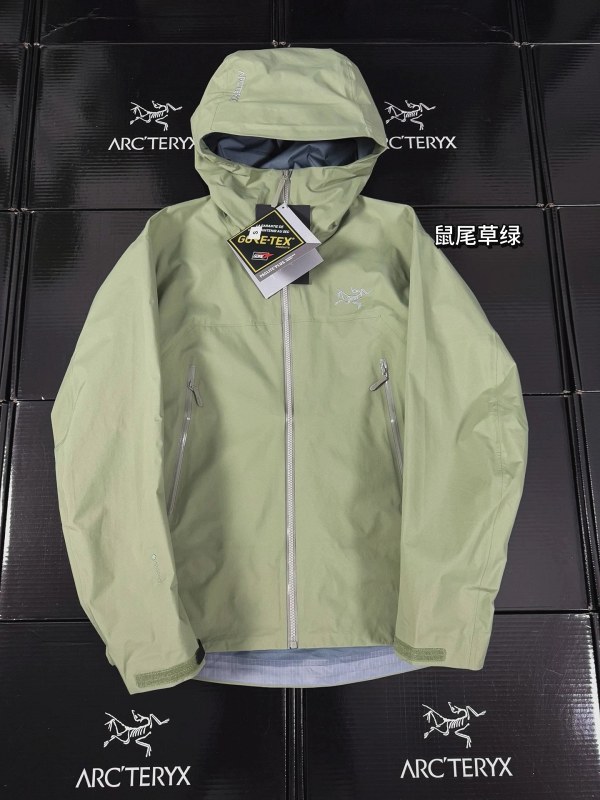
4.0 / 5Hands-on score
Editor verdict
A light, cleanly built pale green shell that measured well and handled a real rain session for $141. The three-layer GORE-TEX wording in the listing stays unconfirmed, so buy it as good outerwear, not as a verified membrane.
What works
- Consistent solid green across panels; tidy 13 mm seam tape and 10 mm allowances.
- 351 g in size M, packs to 24 × 14 cm, with working 33.5 cm two-way pit zips.
- Long 74 cm back and 88.5 cm sleeve with proper elbow articulation.
Watch-outs
- Listing names both N40L GORE-TEX and Tri-Durance fabric; membrane identity is unverifiable at our bench.
- Size range conflicts between XS–XXL and S–3XL, and no independent reviews cover this exact listing.
- No internal chest pocket, no RECCO reflector, and a hood adjuster layout that differs from the retail jacket.
- Who may find this useful
- Commuters, hikers and city walkers who want a light, packable rain shell with a long hem and a generous hood, and who will confirm fabric wording and sizing with the seller first.
- Who may want to skip this
- Anyone buying this as avalanche-terrain kit, and durability-first buyers who would rather carry the extra weight of a heavier Beta AR-type shell.
The pale green shell arrived from the Kakobuy warehouse in a grey polymailer, and the first thing our testing team did was put it on the postal scale before cutting the tape: 0.74 kg sealed, QC tag and bag included. Opened out, the jacket alone weighs 351 g in a size M — light enough to live at the bottom of a daypack from April to October without a second thought. What follows is what fourteen caliper measurements, one long wet afternoon and seven days of walking told us about a $141 hard shell wearing a very familiar silhouette.
We ordered this one because the listing makes two claims that pull in opposite directions: a three-layer N40L GORE-TEX construction with a knit backer, and, further down the same page, a Tri-Durance face fabric. Only one of those can be true of the same jacket. So we treated the delivered garment as the evidence and the listing copy as a claim to be tested.
Why the tape measure went on before the jacket did
Hard shells are the easiest category to check with a bench, because so much of what you pay for is geometry: how much room the hood leaves above your eyebrows, whether the hem clears a harness, whether the cuff cinches far enough to shut out wind on a bike. We logged every figure flat, seam to seam, with the jacket zipped and laid square, then re-checked the two most load-bearing numbers on the body after a week of wear.
| Measurement | Our size M, in centimetres |
|---|---|
| Sealed parcel weight | 0.74 kg |
| Jacket weight, alone | 351 g |
| Chest, pit to pit, flat | 58.0 |
| Hem, flat | 59.5 |
| Back length, collar seam to hem | 74.0 |
| Sleeve, centre back to cuff | 88.5 |
| Cuff opening, flat / cinched | 15.5 / 12.0 |
| Pit zip length | 33.5 |
| Hood opening, flat | 30.0 |
| Seam allowance, side seam | 10 mm |
| Seam tape width | 13 mm |
| Stitch density | 8–9 stitches per inch |
| Packed size, rolled | 24 × 14 cm |
Nothing here is out of line. The 74 cm back length sits where a Beta-family shell should, low enough to cover a belt line, short enough not to sit on when you climb stairs. The sleeve is long in the Arc'teryx way, which is deliberate — it keeps the cuff over the back of the hand when you reach overhead — and the 12 cm cinched cuff was enough to close the wrist on a windy ride without pinching. Articulation at the elbow is real: we bent the sleeve to 90 degrees and the shoulder seam did not lift.
The green, the logo and the seam work under a 5000K lamp
Colour was our first check against the warehouse QC images. Under the lamp the pale green reads solid and flat across the body, hood and sleeves, with no blotching at the panel joins and no shade break where the fabric roll changed. The chest logo is a heat-transfer appliqué rather than embroidery. On our unit the edges are clean, but one corner sits roughly 0.3 mm proud of the fabric — the sort of detail you can feel with a fingernail and will never see at conversational distance.
Seams are the strongest part of the build. Taping is continuous around the hood and shoulders with no lifted corners, and the 13 mm tape is neatly centred over the 10 mm allowances. The hood's rear volume tab and the two front drawcords are a different arrangement from the single-pull system on the retail Beta Lightweight, but they hold their setting and the stiffened brim kept rain out of our tester's glasses on a headwind.
Seven days of walking, three and a half hours of rain
We wore it for a week of commuting and two longer walks before taking it out into steady rain at 11°C. Over a merino base layer it blocked wind completely; over a light fleece the chest stayed roomy enough to layer without the shoulders going tight. Water beaded and ran off the shoulders and hood for the full session, and after three and a half hours the inner face at the shoulder blades was still dry to the touch. The 33.5 cm pit zips are genuinely two-way, and on the one climb where we overheated they dumped heat faster than any membrane can.
Two notes on the zip hardware. The main front zip is a chunky moulded-tooth design with no external storm flap, so it relies on the zip's own coating to shed water; the pocket zips are coated the same way. Arc'teryx's own guidance is that this class of zip is highly water-resistant but not waterproof, and that matches what we saw — a phone in a chest pocket stayed dry in the rain we tested, but we would still bag it for a full day out. The jacket washed once on a cool cycle and re-beaded after a low tumble, which is the maintenance habit line-level reviewers keep stressing for GORE-TEX shells.
What the listing cannot tell you, and what our unit did not have
This is where the spec-sheet argument matters more than the jacket. The listing names N40L GORE-TEX with a warp-knit backer and then, in the next paragraph, a Tri-Durance face fabric; the size range also flips between XS–XXL and S–3XL. Our delivered unit's inner face has a fine knit-backer look that feels closer to a tricot than to the C-Knit used on a retail Beta Lightweight. We can confirm the hand, the weight, the seam tape and the weather behaviour. We cannot confirm membrane identity from a bench in Rotterdam, and no independent buyer reviews exist for this exact listing.
Translated from the listing's own ordering note: "Please state your height and weight when ordering."
Compared with the retail jacket this is modelled on, our unit also omits the internal chest pocket and the RECCO reflector, and there is no hem drawcord split at the front. For city and trail use in the rain, none of those absences changed our week. For avalanche terrain, the missing reflector is a real difference and should be treated as one.
Ordering notes for an agent haul
- Give the seller your height and weight in the order note, as the listing asks, and confirm the size range you are buying into before paying.
- Ask in chat which face fabric the current batch uses, and keep the screenshot — the N40L and Tri-Durance lines cannot both describe the same jacket.
- Request QC photos of the chest logo, the hood brim and the cuffs; those are the three places where batch variation shows first.
- Check the pit zips and the main zip in the warehouse video before the parcel is submitted. Zips are the one part of a shell you cannot fix at home.
How it scored
Our score reflects a shell that measured cleanly, shed a real rain session and cost $141.04 against a $159.65 original price, with the caveat that the fabric specification is unverified and the fit guidance comes from the wider Beta line rather than from this listing. In r/arcteryx threads, owners consistently report hardshells running true to size, with few sizing up; our size M at 58 cm pit to pit supports keeping your normal size unless you plan to layer a heavy midlayer. Sizing up is the wrong move here — the hem and hood are already generous.
Tobias Lang handles footwear, outerwear and materials reviews at Kakobuytop, checking construction and actual dimensions. Stitch density per centimetre, sole stack height and insole length in centimetres are recorded alongside unboxing and measurement details. Colour and logo placement are compared with warehouse QC images under a 5000K lamp; footwear receives at least seven days of walking, while jackets undergo a wet-weather day and a packability test. Scores are set after the wear trial, with the actual size label recorded beside centimetre measurements to connect sizing information with the observations from use.

Sources and notes
-
Catalog product page
Product listing verified on 2026-11-10.
Frequently asked
Is this $141 green shell actually GORE-TEX?
We cannot confirm membrane identity at our bench. The listing names both N40L GORE-TEX and Tri-Durance fabric, so ask the seller which the current batch uses and keep the reply before ordering.
Which size should I order?
Our size M measured 58 cm pit to pit with a 59.5 cm flat hem, in line with standard Beta-line sizing. Arc'teryx owners generally keep their normal size; send height and weight with the order as the listing requests.
Does the hood take a climbing helmet?
The hood opening measures 30 cm flat with a stiffened brim and a rear volume tab, so it swallows a beanie easily. We did not test it over a climbing helmet, and the listing makes no helmet claim.