Start with the Overall Color Palette This flat lay set is built on light-wash gray jeans, paired with taupe, black, and light gray hoodies, creating a streetwear style with a cool gray tone and layered depth. The light wash of the jeans brightens the frame and provides a clear visual base for the darker tops. The taupe hoodie is positioned
Editor score 4.2 / 5
Start with the Overall Color Palette
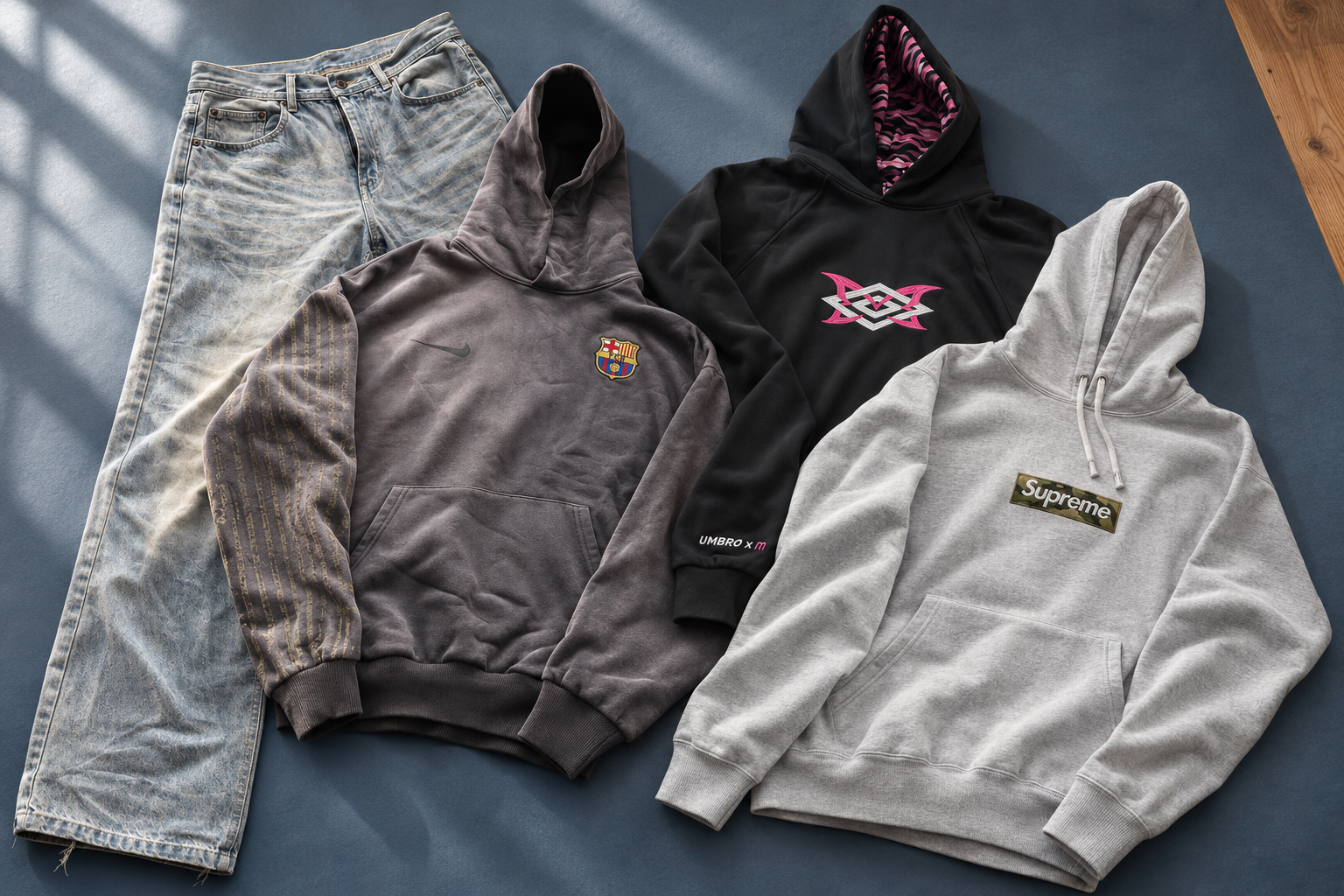
This flat lay set is built on light-wash gray jeans, paired with taupe, black, and light gray hoodies, creating a streetwear style with a cool gray tone and layered depth. The light wash of the jeans brightens the frame and provides a clear visual base for the darker tops.

The taupe hoodie is positioned in the middle, featuring a colorful shield graphic on the chest, stripe details on the sleeves, a kangaroo pocket, and ribbed hem. The black hoodie adds contrast with a pink and black striped lining inside the hood and a pink and white graphic on the chest; "UMBRO" lettering is visible near the cuffs. The light gray hoodie has a prominent rectangular letter graphic, with drawstrings, kangaroo pocket, and ribbed cuffs completing the structural details.
Three Styling Directions
1. Light-Wash Gray Jeans with Dark Hoodie
Pair the black hoodie with light-wash gray jeans for the most direct contrast. The black top can highlight the pink and white chest graphic, while the light-wash texture of the jeans prevents the overall look from feeling too heavy. For flat lay presentation, place the black hoodie above the jeans or diagonally cover part of the legs, creating clear visual focus with black, light gray, and pink.
2. Taupe Hoodie with Coordinated Neutrals
The taupe hoodie is softer than black, suitable for a low-saturation look with light gray jeans. The colorful shield graphic on the chest can serve as a local focal point, while the sleeve stripes add horizontal detail. When laying flat, keep the body wrinkles and sleeve texture to show richer layers without adding strong colors.
3. Light Gray Hoodie with Washed Jeans
Light gray top and light gray jeans are a similar color combination, so the focus should be on fabric texture and silhouette differences. The jeans' wash texture, pockets, fly, and belt loops provide structural variation; the hoodie creates focus on the upper body with its chest letter graphic, drawstrings, and kangaroo pocket. For everyday wear, use dark shoes or a bag to ground the overall color and prevent the top and bottom from blending together.
How to Make Flat Lay Presentation Clearer
- Lay the jeans flat first, then place the hoodies at different angles, keeping the waistband, front pockets, and hems visible.
- Dark hoodies are best placed in the center or back as a visual anchor; light gray and taupe items on the sides balance the light and dark distribution.
- Spread out the hood, cuffs, kangaroo pocket, and hem as much as possible to avoid garments covering key structures.
- Hang tags, drawstrings, chest graphics, and sleeve logos should face upward for easy viewing of design placement.
- Use diagonal placement to create movement, but avoid aligning all garments in the same direction, or the frame will look crowded.
Details to Confirm Before Purchase
Images can help assess color, graphic placement, pocket structure, hood lining design, and the washed look of jeans, but they cannot confirm fabric composition, actual size, fit, thickness, comfort, durability, care performance, price, stock, authenticity, or specific model. For further selection, check the product specifications for actual measurements, fabric description, size chart, and hem treatment; the jeans in the image show loose threads at the hem, a detail worth examining in close-up product page images.
Nadia Vermeer is Editor-in-Chief at Kakobuytop, running the testing desk, writing agent workflow guides and signing off every score. Nadia personally opens roughly half the parcels that reach the desk, while running its seven-step sequence and maintaining each parcel's master file. Order timestamps, agent replies, QC images, line choice, tracking logs, delivered weight and the score sheet form that record. Every received item is compared with full-size warehouse QC photos before scoring; listing photographs alone do not qualify a product for a score, and articles are held until the parcel arrives.