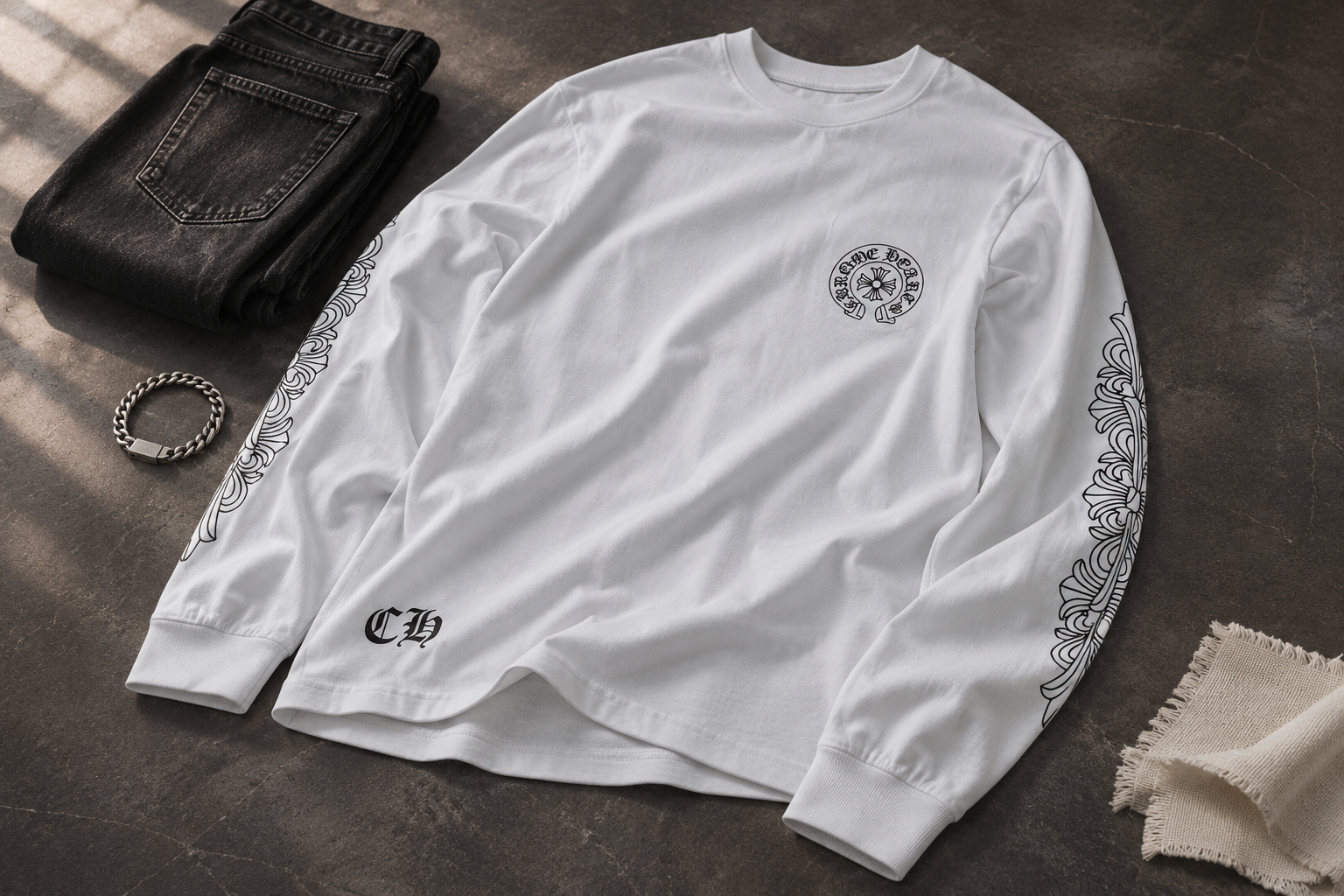
This set of images features a white long-sleeve top as the main subject, with black patterns, a dark background, and a few metal accessories creating a clear cool-toned contrast. When styling, you can work around "white top + black details + dark gray environment," making the sleeve decorations and chest pattern the visual focus. ## Clothing Details in the Image The top features
Editor score 4.2 / 5
This set of images features a white long-sleeve top as the main subject, with black patterns, a dark background, and a few metal accessories creating a clear cool-toned contrast. When styling, you can work around "white top + black details + dark gray environment," making the sleeve decorations and chest pattern the visual focus.

Clothing Details in the Image
The top features a crew neck, long sleeves, and ribbed cuffs. When laid flat naturally, the hem, cuffs, and shoulder-sleeve silhouette are visible. Both sleeves have continuous black decorative prints, and there is a circular cross floral pattern slightly to the right on the chest, with small letter prints near the hem. The white fabric has noticeable wrinkles, giving the image a natural flat-lay appearance.
The black patterns on the sleeves carry more visual weight than the small chest logo. Therefore, when displaying, keep the sleeves spread out to avoid folding and hiding the continuous print. The chest pattern should be positioned slightly above center for easy recognition of the overall style.
Color Pairing Suggestions
White and black are the safest basic combination. The white top brightens the look, while black jeans or dark gray bottoms echo the sleeve prints and tone down the overall brightness, preventing the outfit from looking loose.
For a softer look, add off-white, oatmeal, or light gray accessories. The light-colored fabric at the bottom right of the image reduces the heaviness of the dark background and creates a smoother transition between the white top and the background.
Keep metal accessories to about one piece. The silver chain bracelet in the image adds a cool sheen to the black-and-white outfit without stealing attention from the top's pattern. If adding more accessories, stick with silver or gunmetal and avoid too many high-saturation colors.
Display and Composition
For flat lays, angle the top diagonally, extending from the bottom of the frame to the upper right, with the sleeve patterns guiding the eye along the edges. Place dark jeans at the upper left to add black depth without covering the main body of the top. Arrange accessories in empty areas—leaving some negative space helps highlight the top's silhouette.
For a specific display, follow this order:
- Lay the top flat, keeping natural wrinkles but not letting them cover the chest pattern.
- Spread both sleeves outward so the continuous print is fully visible.
- Use black or dark gray bottoms to balance the brightness of the white top.
- Choose one silver metal accessory as a small highlight.
- Add off-white fabric or light gray objects for soft layering, leaving margin space around the main subject.
Styling Directions to Extend
For a clean look, pair the white top with black straight-leg pants and black shoes, sticking to black and white to highlight the sleeve decorations.
For a streetwear vibe, add dark gray wide-leg bottoms or a black jacket, keeping the sleeve pattern continuous among layers of black. The jacket should not completely cover the sleeves, or the most recognizable detail will be lost.
If you want to lower the contrast, swap black bottoms for gray, faded black, or beige-gray, and keep silver accessories. This still echoes the pattern while softening the white top.
Limitations to Note When Viewing the Image
The current image is useful for judging color relationships, pattern placement, sleeve decorations, and display methods, but a flat lay alone cannot determine fabric composition, thickness, exact size, fit, post-wash condition, or authenticity. For sizing or outfit planning, refer to specific measurements and on-body angles.
Nadia Vermeer is Editor-in-Chief at Kakobuytop, running the testing desk, writing agent workflow guides and signing off every score. Nadia personally opens roughly half the parcels that reach the desk, while running its seven-step sequence and maintaining each parcel's master file. Order timestamps, agent replies, QC images, line choice, tracking logs, delivered weight and the score sheet form that record. Every received item is compared with full-size warehouse QC photos before scoring; listing photographs alone do not qualify a product for a score, and articles are held until the parcel arrives.