This article solves a specific decision: after viewing [Yeezy shoes](https://fashion-reps.net/shoes/yeezy) on fashion-reps, how to check the total package cost before submitting a cross-border order, determine whether current quotes are comparable, which fees still need to be verified, and when to hold off on ordering. The article does not provide unverified real-time shipping or product quotes. Logistics prices, exchange rates, routes, taxes, inventory, and platform fees all change, and the fol
Editor score 4.2 / 5
This article solves a specific decision: after viewing Yeezy shoes on fashion-reps, how to check the total package cost before submitting a cross-border order, determine whether current quotes are comparable, which fees still need to be verified, and when to hold off on ordering.
The article does not provide unverified real-time shipping or product quotes. Logistics prices, exchange rates, routes, taxes, inventory, and platform fees all change, and the following process applies to buyers who need to ship the same batch of Yeezy shoes to a fixed destination. It is recommended to save screenshots of the product detail page, shopping cart, logistics calculator, and payment page during the inquiry process, and record the date and time of the inquiry. 🧾
Clarify the purchase decision for checking yeezy shoe shipping costs
First, write down which decision the results of this check will serve:
- Continue with the order, because the product amount, service fees, packaging fees, and logistics quote have been confirmed under the same criteria.
- Check further information, because the chargeable weight, packaging method, route restrictions, or tax conditions are still unclear.
- Hold off on ordering, because the final cost cannot be verified, or the package risk does not match the budget.
This check only covers one package scenario: fixed Yeezy shoe styles, fixed sizes and quantities, fixed destination, fixed currency, and query time. Do not mix results from different destinations, different routes, or different packaging plans when comparing.
The product pages on fashion-reps are used for discovering products, viewing product information, and checking available product links. Order processing, payment, and cross-border shipping are handled by the shopping agent or related service pages that the buyer subsequently chooses, so the information displayed on the product page cannot be directly equated with the final cost to the door.
Confirm style, size, and current links from the fashionreps catalog and product detail page
Start by entering the specific product page from the fashion-reps catalog, and do not judge the style only by thumbnails or titles in search results. The current check object should include at least:
- Product name and specific style, such as the style name on the Yeezy 700 Sneakers page.
- The current link corresponding to the product detail page or QC page.
- Color, size, and quantity.
- Whether the page is still accessible and displays clear product information.
- Whether there are multiple styles, multiple source links, or different size options.
If multiple styles appear on the page, confirm the selected style first, then save the corresponding link. You cannot apply QC photos, size information, or product descriptions from one model to another shoe. QC images can help verify the product style that the page points to, but images cannot prove material, comfort, authenticity, inventory, or actual shipping costs. 👟
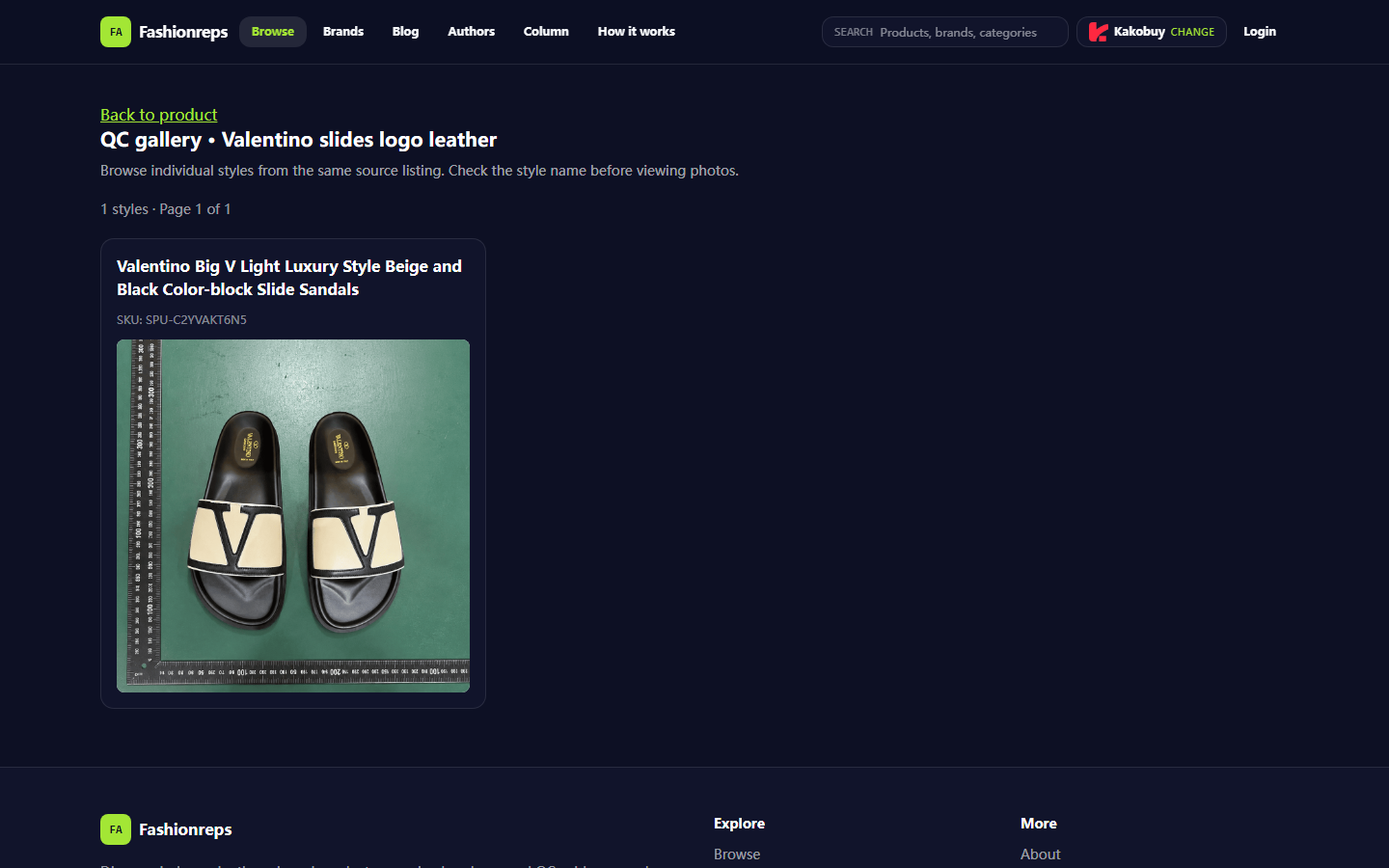
Specified reference image:

The image is used to help identify the corresponding product page and QC scenario, and does not represent the actual package, actual weighing, or final shipping status.
Fix destination, product category, package quantity, weight, and dimensions
The results of the logistics calculator are only meaningful for comparison when the input conditions are consistent. Before starting the inquiry, establish a package condition record:
| Item | What to record | What not to assume directly |
|---|---|---|
| Destination | Country, region, city or postal code, and whether it is a residential address | Different regions necessarily apply the same route and taxes |
| Product category | Footwear, quantity, whether includes shoe boxes or other accessories | Product page category must equal logistics declaration category |
| Package quantity | Single package or split into multiple packages | Splitting is always cheaper or safer |
| Weight and dimensions | Actual weight, estimated weight, length, width, height, and volume | Net product weight equals final chargeable weight |
| Packaging method | Original shoe box, remove shoe box, reinforce, or standard packaging | Removing packaging will always reduce total cost |
| Query time | Year, month, day, time zone, and calculator page used | Future quotes will remain valid |
If the warehouse has not completed weighing, mark the weight as an estimate and do not write the estimated result as the final shipping cost. Also confirm whether the logistics provider uses actual weight, volumetric weight, or the greater of the two. Shoe boxes, outer cartons, and reinforcement materials may change dimensions, thus affecting chargeable weight.
For multiple pairs of Yeezy shoes, first record whether each pair keeps the shoe box, then calculate single-package and split-package options separately. Increasing the number of shoes may reduce repeated first weight or handling costs, but may also increase volumetric weight, package value, and risk of loss per shipment. Splitting may increase fixed costs but also solve route restrictions. Ultimately, do not just look at the per-kilogram price.
Record product amount, payment fees, service fees, and packaging fees separately
Do not simply add the product page price and the logistics calculator quote to get the total cost. At least break it down into the following items:
- Product amount: the product price corresponding to the selected style, size, and quantity. If the page does not have a currently confirmable amount, mark it as pending verification.
- Shopping agent service fee: including purchasing, warehousing, handling, or other service items, subject to the current agent page.
- Payment fees: possible handling fees, exchange rate markups, or other settlement costs charged by the payment channel.
- Packaging fees: consolidating, reinforcing, removing shoe boxes, repacking, or special handling fees.
- International shipping: the price based on chargeable weight or volumetric weight for the logistics route.
- Taxes and destination fees: determined by the destination country's rules, declaration information, route, and receiving conditions, cannot be assumed to be included in the product or shipping cost.
You can use the following recording order to avoid omissions:
Product amount + agent service fee + payment fee + packaging fee + international shipping + destination taxes or other receiving fees = estimated total expenditure
If a certain item does not yet show an amount, keep the item name and "pending verification" status instead of filling in an estimated number. This way, when quotes are supplemented later, you can trace which item caused the total to change. 💳
Do not double-count the same fee. For example, if the logistics calculator clearly includes a certain packaging handling fee, do not add it again from the agent settlement page; if the page states that taxes are not included, keep the tax item instead of interpreting "shipping included" as "door-to-door cost included".
Use the official logistics calculator to check routes, chargeable weight, taxes, and delivery time criteria
After selecting a shopping agent or logistics service, use its current official logistics calculator or settlement page to enter the same set of package conditions. Save the following information during the inquiry:
- Destination and address type.
- Product category and declaration-related options.
- Package quantity, weight, and dimensions.
- Whether to keep shoe boxes, reinforce, and other packaging choices.
- Available routes, chargeable weight, and quote currency.
- Definition of estimated delivery time, such as working days, natural days, or reference range only.
- Whether taxes are included, who collects them, and when they may arise.
- Quote validity, restrictions, and non-acceptance notes.
If the calculator only requires weight and not dimensions, confirm whether the route calculates volumetric weight separately. If the page does not explain the billing rules, do not infer on your own; keep the status as "billing criteria to be confirmed".
Different routes, even if they show similar delivery times, may differ in acceptable products, compensation coverage, tax handling, remote area surcharges, and customs documentation requirements. Shoe packages should not reduce costs through false declaration, under-declaration, splitting to avoid taxes, or evading inspection. Provide the required declaration information truthfully and handle import restrictions and taxes according to the destination country's applicable regulations.
If the logistics calculator is temporarily inaccessible, requires login to show quotes, or the results depend on warehouse rechecking, only record the inquiry entry, the conditions to be supplemented, and the current status, without outputting specific shipping numbers. 📦
Record exchange rates, query time, discounts, and page conditions
Exchange rates are a layer often overlooked in total cost verification. Products, agent settlements, logistics quotes, and payment bills may use different currencies, or exchange rates from different times. It is recommended to record for each amount:
- Original amount and original currency.
- Target currency for conversion.
- Exchange rate source or conversion criteria displayed on the payment page.
- Query date, time, and time zone.
- Whether the payment channel's exchange rate markup is included.
- Coupons, membership discounts, first-order offers, or route promotions used.
- Minimum amount, validity period, routes, and package conditions for the discount.
Do not treat conversion results shown by search engines as the actual debit amount, nor apply discounts from historical screenshots to the current order. Exchange rates and discounts should be based on the current settlement page. If the final amount on the payment page is in a different currency from the logistics calculator, keep both original amounts and mark after conversion "for comparison only" or "subject to actual debit".
To maintain comparability, different logistics options for the same batch of products should use the same query time, exchange rate criteria, and destination information as much as possible. If query times differ, this limitation must be noted in the comparison conclusion.
How to preserve the verification process without fabricating quotes when real-time amounts are missing
Not having real-time amounts does not mean the check cannot proceed. You can first complete evidence preparation and wait for page or warehouse data to be supplemented:
- Save the current Yeezy product page, style, size, and quantity.
- Record the shopping agent name and corresponding settlement entry.
- Create a fee list and mark unknown items as pending verification.
- Wait for warehouse weighing and dimension information, then run the same logistics calculator.
- Record the actual route used, chargeable weight, currency, and delivery time conditions.
- Return to the payment page to check for duplicates or omissions in product, service fees, packaging fees, shipping, and taxes.
- Save final verifiable page evidence before submitting the order.
If you can only see approximate ranges, old screenshots, or historical amounts from other users, do not treat them as current quotes. Historical information can help identify which fee items to ask about, but cannot prove that the current route still has the same price, inventory, or policy.
Final action: save same-criteria evidence and then continue, check further, or hold off on ordering
After completing the check, you can decide based on the following criteria:
- Continue: product style and size confirmed, package conditions fixed, fee items complete, logistics quote from the current page, currency and query time recorded, and taxes and restrictions explained.
- Check further: only part of the amounts visible, or weight, dimensions, shoe box handling, route restrictions, exchange rate markup, or tax responsibility still unclear.
- Hold off: page cannot be verified, quote expired, product link status unknown, or final total cost and package risk unacceptable.
Consolidating packages may save repeated first weight, single handling fees, or some packaging costs; increased risks may include higher volumetric weight, higher declared package value, and expanded loss per shipment. It is more suitable for packages with similar product conditions, same destination, routes allowing consolidation, and buyers who can accept concentrated shipping risks. It is not recommended to consolidate solely for lower shipping costs when dimensions are not confirmed, route restrictions are unclear, package value is too high, or the destination country has additional requirements for the related products.
Splitting packages may increase multiple fixed fees and handling costs, but may be more suitable in terms of weight, volume, route restrictions, or risk diversification. Only after separately checking each package's product amount, packaging, chargeable weight, shipping, taxes, and potential loss can you judge whether splitting truly saves money.
Finally, save a same-criteria record: product page and style, size and quantity, destination, packaging method, weight and dimensions, fee details, route quote, exchange rate, discount, query time, and restrictions. Continue only after evidence is complete; check further when key amounts are missing; hold off when verification is impossible.
Article image

Agent Platform Shopping FAQ
1. What does a QC photo refer to on kako-sheet.org?
Every drop-shipping platform, including the one associated with kako-sheet.org, has a specialized quality control unit. After your goods reach the platform's warehouse, they perform quality checks and capture QC images of the merchandise. Usually, three photographs are taken, and the team confirms that the color, dimensions, specifications, and quantity align with your order. They also look for any defects. However, this does not apply to electronic items, where only the outer casing is examined. If defects or incorrect size or color are found, the team promptly requests a return from the seller. This guarantees that the items you receive meet high quality standards.
2. If I'm unhappy with an item I got through kako-sheet.org, what should I do?
Reach out to your agent platform's customer support without delay. For Chinese sellers, most non-specialty products include a 5-day unconditional return and exchange privilege. If you're dissatisfied, you can ask for a return. In case the item has already been shipped from the warehouse and reached your location, and you detect a quality problem, you must contact the agent platform's support staff so they can help you communicate with the seller to work out compensation.
Here are the customer service email addresses for each platform:
kakobuy: service@kakobuy.com
oopbuy: support01@oopbuy.com
usfans: support@usfans.com
hipobuy: care@hipobuy.com
superbuy: care@superbuy.com
3. How can I look up products I want to purchase on kako-sheet.org?
You may search with one keyword or visit the category section, where items are also sorted by brand. Longer queries generally yield fewer results than shorter ones, but they offer higher precision.
For instance, you could look for "Air Force 1 White," "sneakers," or just "Air Force 1."
4. Is the kako-sheet.org spreadsheet site safe to use?
kako-sheet.org does not gather any personal data; it acts only as a product listing for the agent platform. All transactions occur on the agent platform itself.
5. What kinds of products can be found in the kako-sheet.org spreadsheet?
The kako-sheet.org spreadsheet covers footwear, apparel, bags, accessories, jerseys, fragrances, hats, scarves, belts, and various household items.
Nadia Vermeer is Editor-in-Chief at Kakobuytop, running the testing desk, writing agent workflow guides and signing off every score. Nadia personally opens roughly half the parcels that reach the desk, while running its seven-step sequence and maintaining each parcel's master file. Order timestamps, agent replies, QC images, line choice, tracking logs, delivered weight and the score sheet form that record. Every received item is compared with full-size warehouse QC photos before scoring; listing photographs alone do not qualify a product for a score, and articles are held until the parcel arrives.